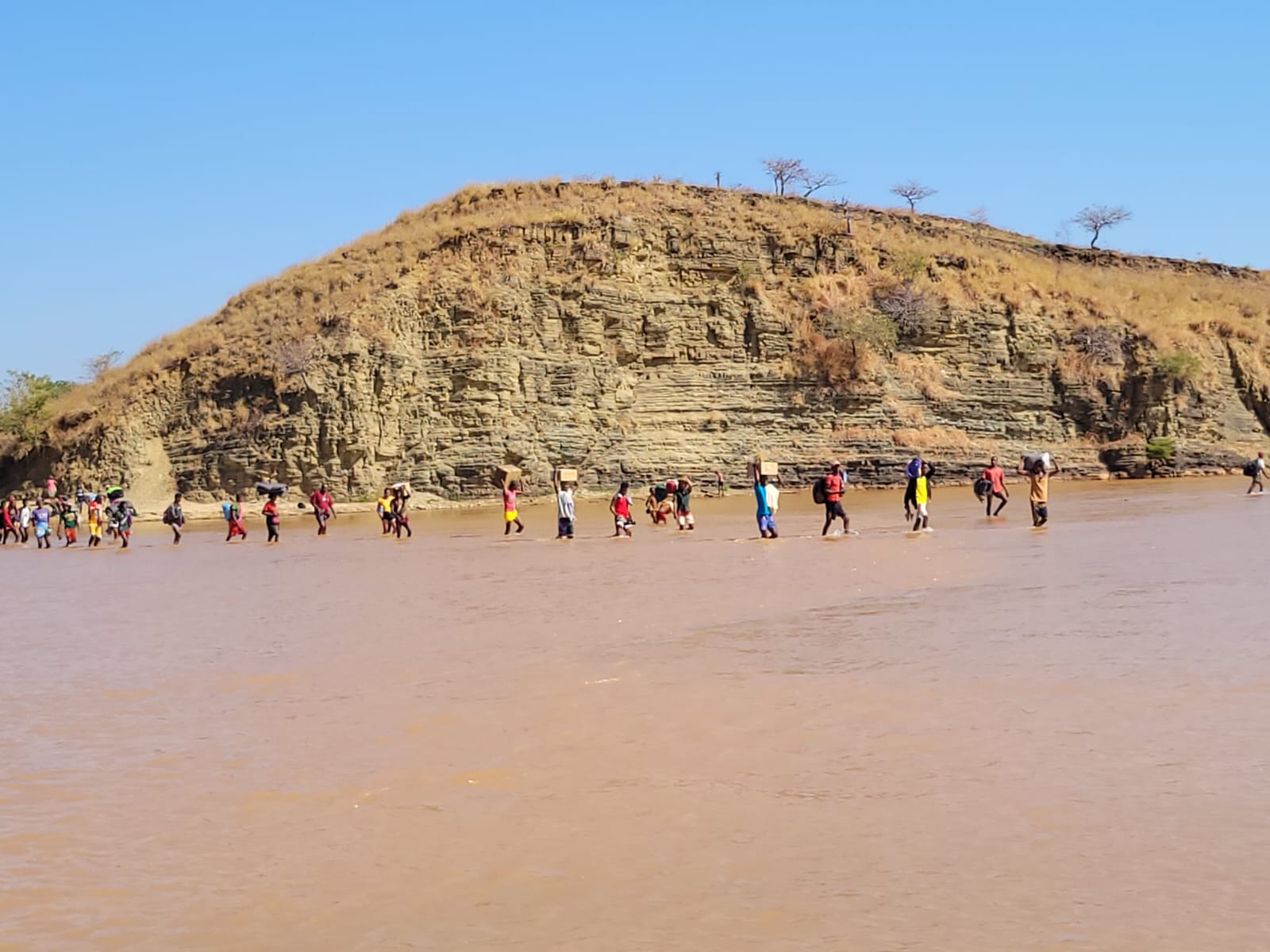
Because of the plane’s limited weight capacity, the team was split into two groups. One
group flew directly from Ivato to Ankavandra on Monday, July 6th, while the other drove to
Tsiroanomandidy and flew from there.Due to the very unstable security situation in
Ankavandra — particularly along the road from the airstrip to the town — the team from
Tana, the transporters, and the gendarmerie waited for the Tsiroanomandidy group before
proceeding into town together. About 15 gendarmes escorted all MMS teams along the
route.
In the afternoon, the team made courtesy visits, beginning with the MAF pastor and continuing at the commune. The village head was unavailable, so the deputy received the team. The team then visited the head of the regional gendarmerie station and was warmly welcomed by both the commune and the gendarmes. Because of the ongoing insecurity, gendarmes patrolled the area around the camp every night for the duration of the stay.
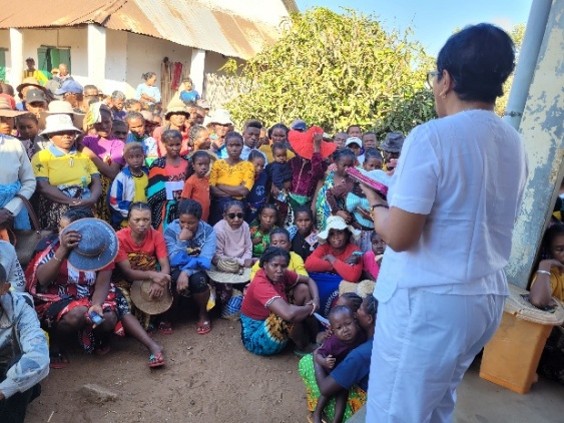
On Tuesday morning, the mission opened at 8:00 a.m., led by local pastors and evangelists sent by MAF. Following the service, the village head gave a brief opening address, and the ceremony closed with remarks from an MMS team representative explaining the mission’s objectives. During the ceremony, the team observed a minute of silence in memory of Dr. Elisoa, who had passed away a month earlier.
This mission felt different from previous ones — the memory of Dr. Elisoa was visible on
everyone’s faces, even as the team tried to stay focused, especially as the plane had just landed on the same Ankavandra runway she had once used. She had left many memories in Ankavandra, including two families who had grown especially close to her. The usual mealtime conversation was quieter than normal; everyone ate, but the mood was subdued as each person settled into their tent. It was clear she had left a real void within the team — she had been like a mother figure to everyone. After the opening speeches, the team moved to their respective work stations to begin medical activities.
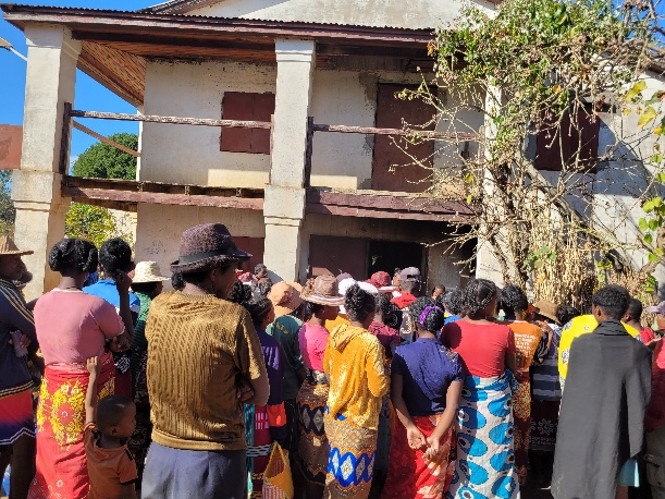
Unlike in previous years, fewer people came for treatment, even though the announcement had been sent out in advance by local officials. This was largely due to the poor security situation around Ankavandra, which discouraged people from the surrounding countryside from traveling into town. Most patients came from Ankavandra town itself or from within about 10 km of it.
The first day of surgery went smoothly. On the second day, however, the oxygen concentrator began malfunctioning, forcing the team to postpone all serious cases requiring oxygen — including four goitre surgeries and several procedures for children under five. Surgeries that did not require significant oxygen support went ahead as planned.
Stories
The most complex case was a gallstone surgery on an 11 year-old child, which was completed successfully; the child is now in good health.
The team also performed a leg amputation on a 22-year-old man. He had developed a blister-like wound on his leg five months earlier that his family had treated with medicinal leaves; the wound worsened over time and became infected to the point of no longer being treatable, requiring amputation. That surgery lasted approximately three hours.
Hernias, hydrocele, and appendicitis were the most common conditions treated surgically. One case — a five-year-old child with a tumor on his back — could not be operated on locally due to its complexity, and the family was referred elsewhere.
For ophthalmology, fewer patients than usual were treated because the equipment burned out on the second day, caused by an unexplained voltage surge from the generator.
The oxygen concentrator may also have been damaged by the same surge, since the aspirator stopped working immediately afterward.
Ultrasound screening detected several abdominal tumors, as well as a bladder stone in the child later operated on for gallstones; the stone had grown large enough that the child had begun losing the ability to urinate.
In general medicine, the team saw a high number of tuberculosis cases — some patients were already on treatment, but others had not yet started, and three were in serious enough condition to require hospital admission arranged by the MMS doctors.
The team also treated many cases of hypertension, genital infections, cystitis, and gastric conditions. Among children, diarrhoea, malnutrition, and epilepsy were the most common presentations.
Overall, the mission in Ankavandra proceeded smoothly, despite security concerns and the shared sadness the team carried in memory of Dr. Elisoa. The team departed Ankavandra on Friday morning, escorted by the gendarmerie to the airstrip for everyone’s safety. The group traveling by car was flown first to Tsiroanomandidy, while the group heading directly to Tana flew via Ambatomainty, where MAF picked up passengers, before continuing on to Ivato.
Statistics - Total 598